Open-source tool
VocalMat
Analysis of mouse ultrasonic vocalizations using computer vision and machine learning — an open-source pipeline built in the lab.
Mice communicate with ultrasonic vocalizations (USVs) that carry rich information about social and developmental state. VocalMat turns raw audio into quantitative data by treating each vocalization as an image and applying computer vision and machine learning to detect and classify calls.
We use it to study mother–infant communication and how vocal behavior develops — a core method behind the lab’s developmental neuroscience projects. The tool is open source so other labs can analyze their own recordings with a consistent, reproducible pipeline.
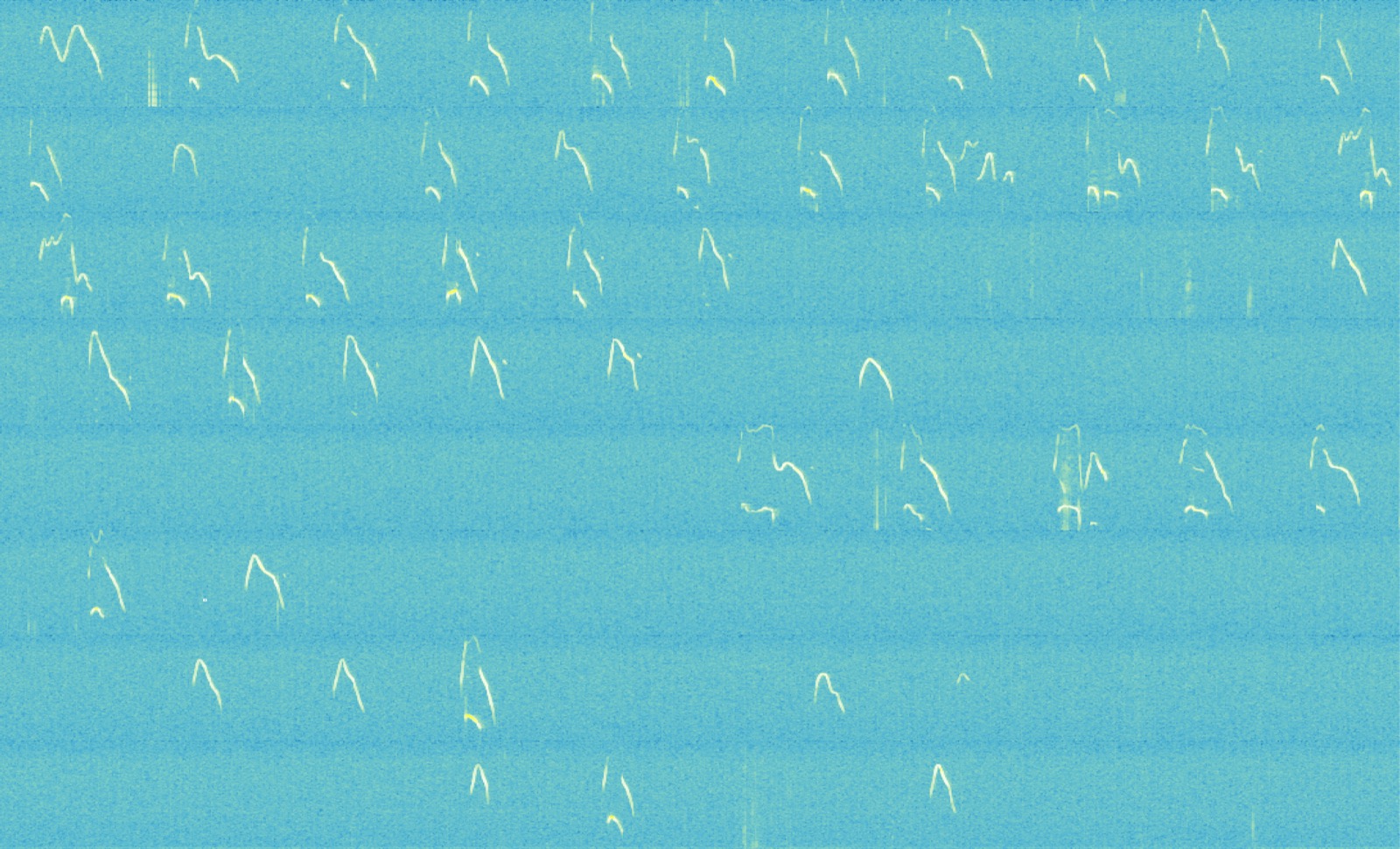
Spectrogram (sonogram) of USVs — VocalMat detects and classifies each call.
How it works
From audio to insight
Computer vision
Detects and segments ultrasonic vocalizations directly from spectrogram images.
Machine learning
Classifies call types automatically, reducing manual annotation.
Open source
Freely available for the research community to use and extend.
Reproducible
A consistent, quantitative pipeline for analyzing mouse USVs.
Also from the lab
SqueakOut
A companion tool for autoencoder-based segmentation of mouse ultrasonic vocalizations. Currently available as a preprint.
Read the SqueakOut preprintMethods & tools publications
SqueakOut: autoencoder-based segmentation of mouse ultrasonic vocalizations (opens in new tab)
bioRxiv (preprint) 2024.04.19.590368 · doi:10.1101/2024.04.19.590368 (opens in new tab)
Analysis of ultrasonic vocalizations from mice using computer vision and machine learning (opens in new tab)
eLife 10:e59161 · doi:10.7554/eLife.59161 (opens in new tab)
VocalMat — open-source USV analysis tool.